Valve Index
Owners keep full Steam and SteamVR support, but a new buyer has to piece together a working set from whatever parts are still in stock.
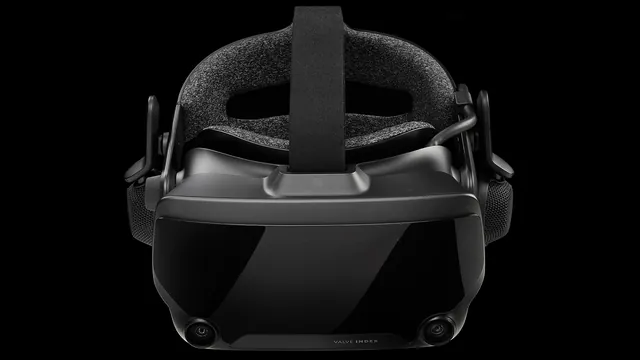
The Valve Index is out of production, and what is left of it is on sale on Steam at 20% off while supplies last. As of November 24, 2026, the headset alone costs $399.20 instead of $499.00, the headset with controllers costs $599.20 instead of $749.00, and the full VR Kit with two base stations costs $799.20 instead of $999.00. Valve posted the news on its Index store page on October 13, 2026, with a promise to anyone who already has one: "nothing changes," and the headset stays supported on Steam and SteamVR. The Index, a PC VR headset that plugs into a gaming computer by cable, came out on June 28, 2019, and was Valve's top headset until the standalone Steam Frame replaced it this fall.
Is the Valve Index discontinued?
Yes. Valve's sunset notice on the Steam store opens with "Valve Index is no longer being produced." It went up on October 13, 2026, and Valve last edited it on October 15. The same page lists every Index item that is still in the warehouse at a new, lower price and says the stock is available "while supplies last." Valve has not said how many units remain or when the sale ends, so the clearance runs until each item sells out.
The notice comes with a warning that is easy to miss. The items on the sunset page are sold separately and are not a complete kit, Valve says, and a working Index needs a full set of parts: the headset, the controllers and the base stations, the small boxes that sit in the corners of the room and track where you are. If one of those parts sells out first, a new buyer can't finish a set from Valve.
For existing owners, Valve's message is short. "If you already own an Index, nothing changes," the notice says, and the headset is still supported on Steam and SteamVR. Hardware problems still go to Steam Support. Valve has not announced an end date for that support, driver updates or repairs.
How much is the Valve Index now?
Every Index item on Steam carries the same 20% cut. These are the US prices on Valve's store on November 24, 2026:
| Item | Old price | Clearance price | What you get |
|---|---|---|---|
| Valve Index VR Kit | $999.00 | $799.20 | Headset, controllers and base stations |
| Headset + Controllers | $749.00 | $599.20 | Headset and two controllers |
| Headset | $499.00 | $399.20 | Headset only |
| Controllers | $279.00 | $223.20 | A pair of controllers |
| Base Station | $149.00 | $119.20 | One base station |
The VR Kit is the simplest buy, because it is the only bundle with all three parts in one box. The Headset + Controllers bundle is the one Valve pitches to owners of existing base stations, including HTC Vive and Vive Pro ones, and the headset alone suits someone who owns both controllers and base stations.
Building a set from single parts costs more: the headset, a pair of controllers and two base stations come to $860.80 at clearance prices, against $799.20 for the kit. Single items make sense only to finish or repair a set you already have.
Owners who want a spare have a deadline they can't see. Valve sells the parts only while supplies last and has published no stock counts, so a pair of controllers or a base station bought now is the surest way to keep an older set running.
What do you need to run a Valve Index?
The Index has no processor of its own for games. It is a tethered headset, meaning it runs off a Windows gaming PC through a cable, so the computer does all the work. Valve's Steam listing gives the minimum PC:
- Windows 10
- a dual-core processor with hyper-threading
- 8GB of RAM
- an Nvidia GeForce GTX 970 or AMD Radeon RX 480 graphics card
- a free DisplayPort 1.2 output and a USB 2.0 or newer port
Those are the minimums Valve set for a headset that launched in 2019. The higher refresh rates the Index offers ask much more of a graphics card than the minimum spec does. The headset connects with a 5-meter cable that ends in a 1-meter breakaway section, so a hard tug unplugs it instead of pulling the PC off the desk.
The room matters too. The Index tracks your head and hands with base stations, which sweep the room with lasers. Valve rates each one at 7 meters of range and a 160 by 115 degree field of view. Up to four can work in one setup, covering a play area of up to 10 by 10 meters. Two is the normal number for a living room.
If you are new to PC VR, our guide to what you need for VR covers the rest of the setup, from space to cables.
Valve Index specs
The Index was built around image quality and comfort rather than price. Valve's own spec sheet lists these figures for the headset:
| Spec | Valve Index |
|---|---|
| Display | Two LCD panels with full RGB per pixel |
| Resolution | 1440 x 1600 per eye |
| Refresh rate | 80, 90, 120 or 144Hz |
| Persistence | 0.330 ms at 144Hz |
| Lenses | Double-element, canted |
| Field of view | About 20 degrees more than the HTC Vive for typical users |
| IPD adjustment | 58-70 mm, physical |
| Cameras | Stereo 960 x 960 pixels, global shutter |
| Connection | DisplayPort 1.2, USB 3.0, 5 m cable |
| Audio | 37.5 mm off-ear speakers, dual microphones, 3.5 mm headphone jack |
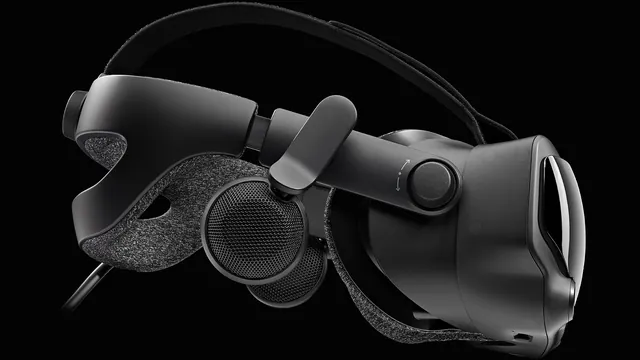
IPD is interpupillary distance, the space between your pupils, and the Index lets you set it with a physical slider so the lenses sit right in front of each eye. The canted lenses are tilted slightly outward, which is how Valve widened the field of view. The speakers sit just off the ears instead of on them, so nothing presses against your head and you can still hear the room around you.
The 144Hz mode is the number Index owners still point to. The image refreshes 144 times a second, and the low persistence means each frame flashes on screen for a third of a millisecond, which keeps fast motion sharp. Valve also built it for tinkerers, with a front expansion slot and cameras that come with sample code for computer vision projects.
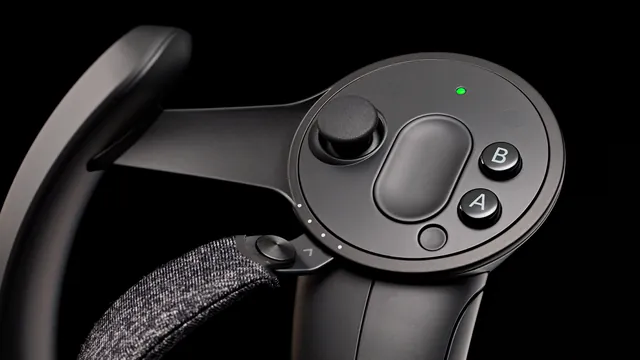
The controllers were the other half of the appeal. Each one straps around the back of the hand, so you can open your fingers in a game without dropping it. Sensors track each finger, and a grip force sensor reads how hard you squeeze, which is why throwing and grabbing feel natural in games built for them. They also carry the usual A and B buttons, a thumbstick, a trigger and a track button with a force sensor, and they charge over USB-C.
Valve Index vs Steam Frame
The Steam Frame, which Valve released on September 14, 2026, is the Index's successor, but it is a different kind of headset. The Index is a PC accessory. The Steam Frame is a computer in its own right: Valve calls it "a PC" that runs SteamOS on a Snapdragon 8 Series processor with 16GB of RAM, so it plays a growing list of VR and regular games on its own, without a PC. It can also stream games from a PC over Wi-Fi.
| Valve Index | Steam Frame | |
|---|---|---|
| Price | $799.20 full kit (clearance) | $1,059.00 with 256GB, $1,299.00 with 1TB |
| Type | Tethered PC VR | Standalone, streams from a PC |
| Processor | None, needs a gaming PC | Snapdragon 8 Gen 3, 16GB RAM |
| Display | 1440 x 1600 LCD per eye | 2160 x 2160 LCD per eye |
| Refresh rate | 80-144Hz | 72-144Hz (144Hz experimental) |
| Tracking | Base stations | Cameras on the headset |
| Connection | 5 m cable to the PC | Wi-Fi 7, Wi-Fi 6E adapter included |
The Steam Frame wins on resolution and freedom. Its panels carry more than twice the pixels of the Index's, it tracks itself with cameras, so there is nothing to mount in the room, and there is no cable to trip over. Its kits leave out a power supply, which Valve notes on the store page.
The Index still has the case for a fixed play space: up to four base stations can watch one room, which Valve says cuts down on moments when the hands are hidden from the sensors, and the Index costs $259.80 less than the cheaper Steam Frame kit at clearance prices. It needs a gaming PC, though, and the Steam Frame doesn't. For the Steam Frame in full, see how much the Steam Frame costs.
Should you buy a Valve Index in 2026?
The clearance makes the Index the cheapest way into Valve's own PC VR hardware, but it fits a narrow group of buyers. It makes sense if you already have a gaming PC with a recent graphics card, a room where two base stations can stay mounted, and a library of PC VR games you want to play at high refresh rates. Racing and flight sim players who sit in one spot and never need to carry the headset anywhere are the obvious fit.
It makes less sense if you don't own a gaming PC. The $799.20 kit does nothing without one, and the computer comes on top of the headset's price. A buyer starting from zero spends less with a standalone headset that needs no computer, and our best VR headset guide compares the current ones by price.
Two more points weigh on the decision. The Index is a 2019 design, and its LCD panels have a lower resolution than newer headsets. And because Valve no longer makes it, parts are finite: if a controller breaks in a year, a replacement may not be on sale from Valve any more. Anyone buying the Index now should treat the controllers and base stations as parts to look after.
What happens to Valve Index owners now?
For now, owners carry on as before. The headset runs on SteamVR, the same software that drives other PC headsets on Steam, so the games in an Index owner's library keep working with it. Valve has said nothing about cutting off that support.
The Index also plays well with other SteamVR hardware, which gives owners a way to keep a set alive. Valve's store says the headset works with any controllers that support SteamVR Tracking, including Index controllers, HTC Vive wands and HTC Vive Pro wands, and with any SteamVR base stations, from Valve or HTC. A broken Index controller can be replaced with a Vive wand in a pinch, though finger tracking is something Valve lists only for its own Index controllers.
Half-Life: Alyx, Valve's flagship VR game, still comes free with Index controllers, so a pair bought in the clearance sale adds the game to your Steam library. Owners thinking about moving on have the Steam Frame as Valve's next step, and the Steam Frame review roundup collects what critics found after its launch.
FAQ
Will Valve stop supporting the Index?
Valve has set no end date. Its sunset notice says the headset is still supported on Steam and SteamVR, and Steam Support handles hardware problems for owners as before.
Do HTC Vive base stations work with the Valve Index?
The Index headset and controllers work with both SteamVR 1.0 and 2.0 base stations, so older HTC Vive ones track them. It doesn't work the other way: Index base stations don't support the original HTC Vive headset and controllers.
Can you use Index controllers with a different headset?
They work with any headset that supports SteamVR Tracking, which Valve lists as the Index, the HTC Vive and the HTC Vive Pro. They need base stations to be tracked.
Add VR.one as a preferred source on Google and our stories show up more often in your Top Stories.