Samsung smart glasses price and release date: from $395, out December 10
Two eyewear brands sell the frames, Google supplies the brains, and owners of older iPhones should read the fine print before they order.

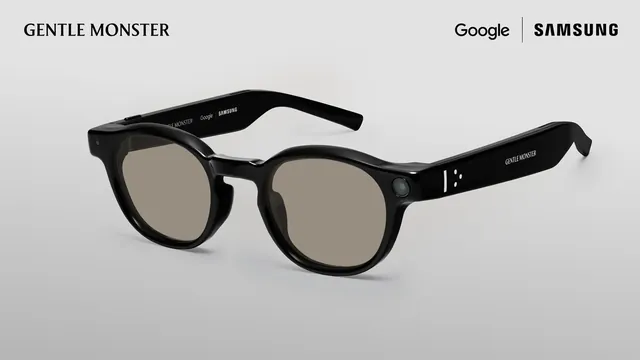
Samsung's smart glasses start at $395. Preorders opened on November 12, 2026, and the glasses go on general sale in the US on December 10, 2026. Samsung builds the hardware, Google supplies Android XR and its Gemini assistant, and two eyewear brands sell the frames: Warby Parker's three styles start at $395, and Gentle Monster's six styles cost $449 to $489 depending on the model. Samsung calls the product "intelligent eyewear", and it has no display: you talk to it, it talks back through open-ear speakers, and a 12MP camera lets Gemini see what you see. The glasses work with recent Galaxy and Pixel phones and with some iPhones.
Samsung smart glasses price and release date
Samsung Electronics America announced the US release on November 12, 2026, and Google posted its own announcement the same day. Both say preorders are live now and that the glasses go on sale in stores and online on December 10.
| Collection | Frame styles | Variations | US price |
|---|---|---|---|
| Warby Parker Intelligent Eyewear | 3 (Alden, Reid, Wren) | 14 | from $395 |
| Gentle Monster Intelligent Eyewear | 6 | 16 | $449 to $489 |
That makes 30 designs in all. Warby Parker sells optical and sun versions of each of its frames, in Pine, Saddle and Jet Black, with a range of widths and lens options. Gentle Monster's six designs come in bolder colors, including dark red, pink, gray and yellow, with tinted, clear, blue or brown lenses.
The prices are for the frames as configured by each brand. Prescription lenses cost extra, and neither Samsung nor Google lists what they add: those prices sit with the two retailers.
Where to preorder Samsung's smart glasses
You don't order these from Samsung. Preorders run through Warby Parker and Gentle Monster, online and in their stores, and Google points buyers to the Google Store website as well. Samsung's page sends prescription buyers to the same two places: Warby Parker sells prescription lenses online and in store, and Gentle Monster sells them through its official US online store. Google says prescription options exist for most Gentle Monster frames, and Warby Parker's lenses come with a scratch-resistant coating and block 100% of UVA and UVB rays.
If you want to try a pair first, there are three places to go:
- Warby Parker: guided demos can be booked at more than 360 of its stores.
- Gentle Monster and the Google Store: Google says hands-on demos run at select locations of both.
- Samsung: demos start at select Samsung retail locations on December 10, the day general sale begins.
Google says the Gentle Monster collection will be sold in South Korea as well as the United States. The glasses work only with Google accounts from the United States and South Korea, and the account has to belong to someone 18 or older: Samsung says age verification is required to activate the glasses and to download apps.
Do Samsung's smart glasses have a display?
They don't. Samsung's own product page answers the question plainly: you use the glasses through sound and your voice, and there is no screen. That puts them in the same family as audio-and-camera glasses rather than glasses with a picture in the lens, such as Snap Specs, or the glasses-shaped VR headset Meta showed at Connect 2026.
What you get instead is a 12MP camera at eye level, two open-ear speakers that leave your ears uncovered, four microphones and Gemini, Google's AI assistant, which you wake by saying "Hey Gemini" or by tapping the frame. Paired with a Galaxy phone, the photos and videos you shoot show up on the phone's screen. With a Galaxy Watch on your wrist, Samsung says simple hand gestures can answer calls or control Gemini.
Samsung smart glasses specs and battery life
Samsung published a full spec sheet with the announcement. The weight below is for its reference model, GGS002, with standard lenses; across the lineup, Gentle Monster frames weigh 39.6 to 43.9 grams and Warby Parker frames 40.4 to 42.6 grams.
| Spec | Samsung intelligent eyewear |
|---|---|
| Weight | About 41 g (prescription lenses not included) |
| Charging case | 194.5 g (Gentle Monster), 166.8 g (Warby Parker) |
| Chip | Snapdragon AR1 Gen 1 |
| Memory and storage | 2GB, 64GB |
| Camera | 12MP HDR, ultra-wide; photos 3,024 x 4,032 in 3:4 portrait |
| Video | 3K at 30fps or 2K, with HDR up to 2K |
| Audio | 2 open-ear speakers, 4 microphones |
| Battery | Up to 9 hours, up to 72 hours with the case |
| Controls | Touch and voice |
| Assistants | Gemini; Bixby with Galaxy phones only |
| Water resistance | IPX4, meaning it shrugs off splashes and sweat |
| Wireless | Wi-Fi 6E, Bluetooth 5.4 |
The nine-hour figure is for mixed use: Gemini conversations, music, video capture, messages and notifications. Google says the case can recharge the frames up to seven times.
The chip doesn't do all the work alone. Samsung describes a split-computing setup, in which part of the processing load is handed off to the connected phone. That is part of how the frames stay near 41 grams, and it is also why the glasses need a phone at all. An off switch on every pair turns them into ordinary glasses when you want.
Which phones work with Samsung's smart glasses?
The glasses pair with three families of phones, and each comes with a software floor:
| Phone | Models | Software needed |
|---|---|---|
| Samsung Galaxy | Galaxy S, Galaxy S FE, Galaxy Z Fold, Z Flip and Z Fold Ultra series | One UI 9.0 or later |
| Google Pixel | Pixel 7 series and later | Android 17 September 2026 update or later |
| Apple iPhone | iPhone 13 Pro and later (6GB of RAM minimum) | iOS 26.6 or later |
The iPhone row is the catch. Samsung's spec sheet says iPhone 13 and later, but adds a minimum of 6GB of memory, and Google's own list starts at the iPhone 13 Pro. In practice that leaves out the standard iPhone 13 and iPhone 13 mini. Galaxy A phones, Samsung's budget line, aren't on the list either.
Some features depend on the phone, too. Google says that at launch, Audible, its Guided Vision feature and the Aira service work only with an Android phone. Bixby works only with Galaxy phones, and Galaxy owners get the extras covered above: photos on the phone's screen and Galaxy Watch gestures.

What Gemini does on the glasses
Most of what the glasses offer runs through Gemini. The examples Samsung and Google give fall into four groups:
- Asking about what you see. Look at a landmark, a mural or an object and ask what it is, then keep the conversation going with follow-up questions.
- Turning sights into tasks. Snap a whiteboard in a meeting and have Gemini summarize it into Samsung Notes, add an item you are looking at to a grocery list, or check your calendar against an event poster.
- Translating and finding your way. Google Translate delivers real-time speech translation with automatic language detection across more than 70 languages, and Google Maps reads turn-by-turn directions into your ear.
- Staying in touch hands-free. The glasses can group and summarize notifications, read important ones aloud, take calls and reply to messages.
Music comes from YouTube Music, Spotify or Apple Music. For people who are blind or have low vision, Google lists Guided Vision, which describes surroundings aloud, and Aira, which streams the camera feed to a trained human interpreter. Google notes that Guided Vision can make mistakes and is not a mobility aid, and that these services may need a subscription or membership.
Privacy: the recording light and face blurring
A camera on your face raises the obvious question for everyone else in the room, and both companies spent a good part of their announcements on it.
- A light that can't be hidden. When the glasses take a photo or record video, a bright LED on the outside shows it, and the wearer gets a light and a sound as well. If the LED is covered or not working, the camera won't capture.
- The camera switches off when you take them off. Wear detection turns the camera off once the glasses leave your face.
- Bystanders' faces are blurred for Gemini. When you ask Gemini about what you're looking at, the glasses redact the faces of people nearby before Gemini answers.
- What Gemini sees stays out of training. Camera visuals from Gemini on the glasses aren't saved in Gemini History and aren't used to train AI models or to target ads. Data stored on the glasses is encrypted, and so is anything that leaves them.
- Quieter audio. The open-ear speakers are tuned to limit sound leakage, and in Gemini Live conversations other people's voices are filtered out.
You also decide which apps get the camera and the microphone, and you can review or delete your Gemini chats at any time.
Are Samsung's smart glasses any good for gaming?
Not in the way a headset is. With no display, there is nothing to look at, and neither company has said a word about games. Where they could fit a gamer's day is as audio: open-ear speakers and four microphones make them a hands-free way to take a call or hear messages while your hands are on a controller, though Samsung and Google pitch them for walking around town, not for voice chat in a match.
For playing, the choice is still between a headset and glasses with screens. If you are weighing where face-worn tech is heading, our look at smart glasses versus VR headsets covers it. Samsung's glasses are a different bet: a $395 pair of frames you would wear anyway, with an assistant built in. They ship on December 10, 2026, and preorders are open now.
FAQ
Can I play games on Samsung's smart glasses?
Samsung and Google haven't announced any games or gaming apps for them. Their launch features are Gemini, calls, music, photos, translation and navigation.
Do the glasses work without a phone?
They need a compatible phone paired over Bluetooth. They can run on the phone's mobile data without Wi-Fi, though Samsung says Wi-Fi may be needed to import photos and videos and to install software updates.
Where do I go for repairs or returns?
Samsung sends support, repair, warranty and return questions to the retailer you bought from, which means Warby Parker or Gentle Monster for preorders.
Add VR.one as a preferred source on Google and our stories show up more often in your Top Stories.