Nvidia earnings
The first report since Jensen Huang resigned is also the first full look at how the RTX Spark launch and DLSS 5 fit into Nvidia's new Edge Computing line.
Nvidia reports its earnings for the third quarter of fiscal 2027 today, Tuesday, November 17, 2026, at about 1:20 p.m. PT (4:20 p.m. ET), and holds its earnings call at 2 p.m. PT (5 p.m. ET). The bar is Nvidia's own forecast: revenue of $108.0 billion, plus or minus 2%, for the three months that ended October 25, 2026. It is the company's first report since Jensen Huang resigned as CEO on November 12, 2026, and the first quarter in which RTX Spark laptops were on sale.
For PC gamers the number to look for sits lower in the release. Nvidia no longer breaks out a Gaming line. GeForce graphics cards, gaming laptops and the chips Nvidia sells for game consoles now count toward Edge Computing, a segment that also holds workstations, robots, cars and telecom base stations. That line brought in $7.2 billion last quarter, a small slice of a company whose data center business made $89.0 billion in the same three months.
When does Nvidia report earnings today
Nvidia set the schedule on October 28, 2026, and repeated it in the November 12 announcement of the CEO change, which said the results would come out "as previously scheduled."
| Event | PT | ET |
|---|---|---|
| Results press release | about 1:20 p.m. | about 4:20 p.m. |
| Written CFO commentary posted | right after the release | right after the release |
| Earnings call and live webcast | 2:00 p.m. | 5:00 p.m. |
The release lands after the US stock market closes at 4 p.m. ET. The written commentary from Colette Kress goes up on investor.nvidia.com as soon as the numbers are public, so the details of each segment are readable before the call starts. The webcast is listen-only. After prepared remarks, the question-and-answer part is limited to financial analysts and institutional investors, so viewers hear the questions without being able to ask any.
What Nvidia expects for the third quarter
Nvidia gave its forecast on August 26, 2026, with its second-quarter results. Beyond the $108.0 billion revenue target, it guided gross margin, the share of revenue left after the cost of making its chips, to 74.0%, plus or minus half a point. It expects operating expenses of about $9.2 billion under standard accounting rules (GAAP) and about $9.0 billion on its adjusted basis, which strips out items such as stock-based pay. The forecast assumes no data center compute revenue from China.
The trend behind that target is steep. A year earlier, in the quarter that ended October 26, 2025, Nvidia's revenue was $57.0 billion. Hitting the midpoint of today's forecast would put revenue up by roughly 89% from that quarter.
| Quarter (fiscal year) | Ended | Revenue | Change from a year earlier |
|---|---|---|---|
| Q3 FY2026 | October 26, 2025 | $57.0 billion | up 62% |
| Q1 FY2027 | April 26, 2026 | $81.6 billion | up 85% |
| Q2 FY2027 | July 26, 2026 | $96.2 billion | up 106% |
| Q3 FY2027 forecast | October 25, 2026 | $108.0 billion, plus or minus 2% | about 89% at the midpoint |
Nvidia's fiscal year runs about eleven months ahead of the calendar: fiscal 2027 began in late January 2026 and ends in January 2027. That is why a report in November 2026 covers the "third quarter of fiscal 2027."
Last quarter Nvidia's adjusted earnings came to $2.22 a share, and $2.46 a share under GAAP. Gross margin was 75.0% on both measures. The company returned about $26.0 billion to shareholders through buybacks and dividends in that quarter, and it had about $99.0 billion left under its buyback authorization at the end of July.
Where gaming went in Nvidia's results
Until early 2026, Nvidia's releases carried a line called Gaming and AI PC. In its last report under that format for a third quarter, covering the three months to October 26, 2025, Gaming revenue was $4.3 billion, up 30% from a year before.
With its first-quarter fiscal 2027 results, Nvidia moved to what it calls a new reporting framework with two market platforms. Data Center splits into Hyperscale, meaning public clouds and the largest consumer internet companies, and ACIE, short for AI Clouds, Industrial and Enterprise. Edge Computing covers what Nvidia calls data processing devices for agentic and physical AI: PCs, game consoles, workstations, AI-RAN base stations for cell networks, robotics and automotive.
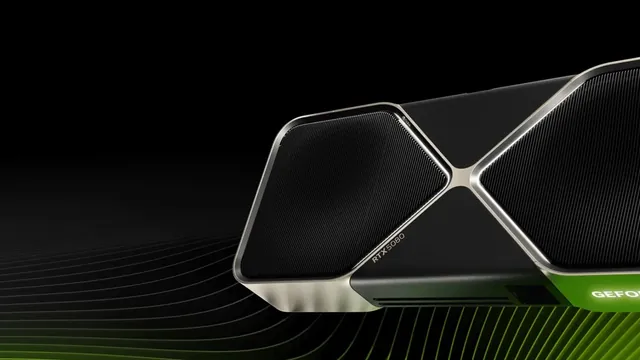
So a GeForce card on a store shelf, the Nvidia chip inside a console and a robotaxi computer now feed the same number. Edge Computing was $6.4 billion in the first quarter, up 29% from a year earlier, and $7.2 billion in the second, up 13% from the quarter before and 27% from a year earlier. Today's release will show whether the line kept growing through a quarter with two big consumer launches. Nvidia doesn't give a separate forecast for it.
RTX Spark and DLSS 5 in the third quarter
Two of Nvidia's biggest consumer moves of 2026 fell inside the quarter being reported today.
The first was software. On September 1, 2026, Nvidia released DLSS 5, the newest version of its AI graphics technology. Earlier versions of DLSS raised frame rates by rendering fewer pixels and filling in the rest. DLSS 5 adds what Nvidia calls 3D-Guided Neural Rendering: an AI model that runs as the last step of the graphics pipeline and adds lighting and material detail on top of the frame the game engine has drawn, while the engine's own geometry and textures stay as the artists built them. Developers pick from several models and can tune how strongly each is applied, scene by scene. For players it is a single on or off switch. Nvidia says a model released in October 2026 runs twice as fast on GeForce RTX 50 Series cards and RTX Spark systems.

DLSS 5 doesn't produce revenue by itself, since it comes with the driver. What it does is give owners of older cards a reason to look at an RTX 50 Series card, which is the kind of demand Edge Computing will show today. Several of its best-known games arrived after the quarter closed: Hogwarts Legacy got DLSS 5 on November 5, 2026, War Thunder on November 12, and Where Winds Meet is set for November 23, 2026.
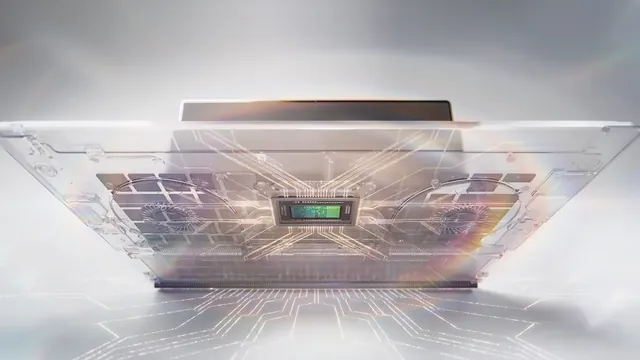
The second move was hardware. RTX Spark is Nvidia's superchip for Windows laptops: an Nvidia Blackwell RTX graphics processor and an Nvidia Grace processor on one superchip, with up to 128GB of memory shared by both and up to 1 petaflop of AI compute. Laptops built on it went on sale in mid-October 2026, starting at $2,399, from Asus, Dell, HP, Lenovo, Microsoft and MSI. Nvidia marked the launch with six store events worldwide, including one at a Best Buy in San Francisco.
That gave RTX Spark only about ten days of sales before the quarter ended on October 25, 2026. Any comment from Kress on early demand, or on how many systems are on the way, will matter more than the revenue it added this quarter.
| Launch | Date | What it is | Where it counts |
|---|---|---|---|
| DLSS 5 | September 1, 2026 | AI lighting and materials for games | Driver feature, no direct revenue |
| Faster DLSS 5 model | October 2026 | Twice the speed on RTX 50 Series and RTX Spark | Driver feature |
| RTX Spark laptops | mid-October 2026 | Blackwell RTX graphics and Grace CPU on one chip, from $2,399 | Edge Computing |
Frame rates remain the number most players judge a PC by, and our guide to the Steam Deck average framerate explains how to read them on a portable machine.
Who runs Nvidia after Jensen Huang
On November 12, 2026, Nvidia's board announced that Huang had resigned as president, chief executive and board member, effective immediately, after 33 years at the company he founded. Colette Kress, Nvidia's chief financial officer since September 2013, became interim CEO and keeps the CFO job while the board searches for a permanent chief. The board says it will look at internal and external candidates. Before Nvidia, Kress spent nearly 25 years in finance at technology companies including Cisco and Microsoft.
The board also named its first-ever chair, Harvey C. Jones, a former chief executive and executive chairman of the chip design software company Synopsys. Jones said the board "has full confidence in Colette and the leadership team" and expects operations, customer commitments and the product roadmap to carry on without interruption.
The change came two days after a statement from the board's independent directors, dated November 10, 2026, saying they had retained Joon H. Kim, a former acting US Attorney for the Southern District of New York, and his law firm to run an independent investigation first announced on Sunday, November 8. On November 17, 2026, the board created a standing National Security and Export Control Oversight Committee, chaired by director Suzanne Nora Johnson, with directors Stephen C. Neal and John O. Dabiri. Nvidia's national security and trade compliance teams now report to that committee and to Kress.
That makes today's call unusual. Kress normally explains the numbers; today she presents them as the company's acting head, and her written commentary will be the first financial update under the new leadership.
What to watch in the Nvidia earnings report
For readers who follow Nvidia for its graphics cards rather than its stock, a few lines in today's release say the most.
- Edge Computing revenue. The closest thing to a gaming number. Growth faster than in the second quarter would point to strong demand for RTX 50 Series cards and the first RTX Spark laptops.
- Total revenue against the forecast. The guidance range runs from about $105.8 billion to $110.2 billion. Data center sales drive most of it.
- Gross margin against guidance. It shows how much of each dollar of sales Nvidia keeps after making its chips, at a time when it sells far more data center hardware than ever.
- The fourth-quarter forecast. It covers the three months through late January 2027, which take in the holiday season for PCs and laptops.
- Comments on RTX Spark and DLSS 5. Any number on RTX Spark systems shipped, or on new laptops and games, will come in the written commentary or the call.
Nvidia's consumer calendar keeps moving whatever the report says. A GeForce Game Ready driver came out on November 11, 2026, with support for Warhammer 40,000: Dawn of War IV, the DLSS 5 update for Where Winds Meet and Dynamic Multi Frame Generation in Assetto Corsa Rally. PC players waiting on the biggest game of the season should read our story on the GTA 6 PC release date, since Rockstar's launch is console-only for now.
How to follow the Nvidia earnings call
The press release goes up on Nvidia's newsroom at nvidianews.nvidia.com, and the release, the CFO commentary and the webcast all sit on investor.nvidia.com at the times in the table above. Anyone who misses the call can play the recording there until Nvidia's next call, the one for the fourth quarter and the full fiscal year 2027. Nvidia hasn't announced the date of that report yet.
FAQ
Does Nvidia pay a dividend?
Yes. Nvidia pays $0.25 a share each quarter, after raising it from $0.01 in May 2026; the latest payment went out on October 1, 2026, to holders of record on September 10, 2026.
Does Nvidia still report gaming revenue on its own?
Since its first quarter of fiscal 2027, Nvidia groups GeForce PCs and game consoles with workstations, robotics, cars and telecom gear under one line called Edge Computing.
Will the CEO change affect GeForce drivers or DLSS updates?
Nvidia hasn't announced any change to its driver or DLSS plans, and its GeForce news page kept posting DLSS 5 game updates after the announcement.
Add VR.one as a preferred source on Google and our stories show up more often in your Top Stories.