How to raise a bilingual child: 10 practices backed by research
What the research on how young children learn language means for busy parents: what each study found, who took part and where the evidence is thin.
To raise a bilingual child, give the second language a steady share of your child's week, use it in real back-and-forth conversation every day, choose people and books over passive screens, and keep one short daily routine you can actually stick to. That is the short version of nearly four decades of research on how young children learn language, much of it on children learning two, and none of it requires you to be a teacher or to speak the second language perfectly.
It's a common project in the US. According to the Census Bureau's 2025 American Community Survey, 22.9% of people aged 5 and older, about 74 million, speak a language other than English at home. A 2025 Migration Policy Institute analysis of census data from 2019 to 2023 found that a third of children aged 5 and under who live with a parent, about 7.1 million, have at least one parent who speaks another language at home. Some of those families want to keep a home language alive, and others want to add a new one from the first words.
10 ways to raise a bilingual child at a glance
| # | Practice | What the research shows |
|---|---|---|
| 1 | Choose a family language plan | Home languages last best when both parents use them at home |
| 2 | Give the second language a real share of the week | A toddler's words in each language track how much they hear it |
| 3 | Talk with your child, not at them | Back-and-forth exchanges go with stronger language skills |
| 4 | Choose live people over passive screens | Babies learned from live people, and toddlers from people and video calls, not from recordings |
| 5 | Practice together five minutes a day | Short sessions spread over days beat cramming, and saying the words helps |
| 6 | Read the same books again, and talk about them | Asking questions while reading builds the words children say |
| 7 | Sing songs, then ask for the words | Songs helped children understand new words more than say them |
| 8 | Keep answering in your language | Using your language consistently, and making your preference clear, goes with children answering in it |
| 9 | Expect mixing and an uneven pace | Mixing is normal, and vocabulary should be counted in both languages |
| 10 | Protect the home language with a circle of speakers | Home languages can fade once English takes over |
1. Choose a family language plan
Before the first words, decide who speaks which language to your child, and when. The best-known plan is one parent, one language, where each parent sticks to their own. Other families keep the home language for everyone at home and leave English to school and the outside world, or split by time and place, such as weekends or bedtime stories in the second language.
A large survey of how these plans play out covered nearly 1,900 families in Flanders, the Dutch-speaking part of Belgium. In every family, at least one parent spoke a language other than Dutch. Linguist Annick De Houwer looked at whether their children, aged 6 to 10, spoke that language. All of the children spoke Dutch, the language of the community, but not all of them spoke the family's other language. Children were most likely to speak the home language when both parents used it at home. One parent, one language turned out to be neither necessary nor enough on its own.
A later re-analysis of the same data adds numbers. When both parents spoke only the home language, 97% of families had a child who spoke it. When at least one parent also spoke Dutch at home, so the child most likely heard both languages from birth, the figure was about 70%. That 70% is an average across several kinds of homes: in the original survey, homes where both parents spoke the home language and one also spoke Dutch did about as well as homes with the home language only.
The survey relied on parents' answers, covered school-age children and came from one region of Europe, so treat the numbers as a guide, not a forecast for your family. The direction is clear, though: the more the home language is the everyday language of the house, the better its odds. If neither parent speaks the second language well, the plan is about who else will bring it in, and practice 10 shows how to build that circle of speakers.
Try this: write the plan down in one sentence, such as "Mom speaks Spanish, Dad speaks English, and bedtime stories are in Spanish," so grandparents and sitters know their part too.
2. Give the second language a real share of the week
How much a child hears a language is one of the strongest and most consistent predictors of how well they learn it. In a study of 25 toddlers aged 8 to 30 months learning Spanish and English, the share of words a child knew in each language closely tracked the share of time they heard it, with a correlation of 0.82, where 1 would be a perfect match.
Later work in South Florida measured exposure in more detail. Mothers of 29 two-year-olds who had heard Spanish and English from birth kept a diary of every half hour their child was awake for a week, noting which language the child heard and from whom. The relative amount of exposure predicted the children's skills in both languages. A larger study followed 47 bilingual and 56 English-only toddlers from 22 to 30 months of age: nearly every vocabulary and grammar measure in each language was related to the share of speech the child heard in that language. In English, the English-only toddlers were ahead of the bilingual group as a whole. For bilingual toddlers who heard English at least 70% of the time at home, the gap was smaller, and often too small to rule out chance.
A study in Montreal found that understanding and speaking need different amounts. Five-year-olds who heard French and English about equally understood as many words as children who spoke one language. To say as many words, they needed more exposure. The author noted that many earlier studies had found bilingual children behind, and linked the even match to Montreal's favorable setting for learning both languages and to how closely French and English are related.
You'll often see a minimum quoted, such as 20% or 25% of a child's waking hours. The studies here point to a sliding scale rather than a proven cutoff. The low end is the least certain part: in the study of 25 toddlers, the share of a child's words in Spanish didn't reliably track the share of Spanish they heard once that share was small.
Try this: borrow the researchers' diary for one ordinary week and note, for each half hour your child is awake, which language they heard and who spoke it. If the second language barely shows up, add hours where they're easiest to find: a caregiver, a weekly playdate, a daily lesson.
3. Talk with your child, not at them
In two studies that recorded children at home all day, the number of back-and-forth exchanges a child took part in was more closely linked to their language skills than the number of words they heard. Researchers call these exchanges conversational turns: you say something and your child answers within a few seconds, or the other way around.
In a study of 36 children aged 4 to 6 from families across a range of incomes, all-day home recordings over a weekend counted the adults' words, the things the child said and the turns. Turns had the strongest link to the children's verbal test scores, a correlation of 0.51 against 0.36 for the number of adult words. After the researchers accounted for parents' education and income, turns were the only measure that still added to the picture.
A longer study recorded 146 children in the Denver area for whole days, once a month for six months. Conversational turns at 18 to 24 months accounted for 14% to 27% of the differences in IQ, verbal comprehension and vocabulary scores about 10 years later, even after accounting for family background. Only 44 children were in that age group, and three of the authors worked for the organization that makes the recording device.
How you talk matters too. Parentese is the slower, higher-pitched, sing-song voice adults often use with babies, with real words rather than made-up baby talk. In a study of 26 babies aged 11 and 14 months, parentese used one-on-one went with more babbling at the time and more words at age 2. It can also be taught. In a trial with 71 families in Seattle, chance decided which parents got coaching on parentese and back-and-forth talk when their babies were 6, 10 and 14 months old. At 18 months, the coached families' toddlers said more words in home recordings, and had larger vocabularies on a parent checklist, than toddlers in families without coaching.
Following your child's lead helps these conversations land. In a classic study of 24 children observed at 15 and 21 months, mothers who talked about whatever their child was already looking at had children with larger vocabularies at 21 months, while redirecting the child's attention went with smaller ones. In a small experiment from the same paper, 10 children aged 17 months learned new words better when an adult used them for what the child was already looking at.
All of these studies took place in English-speaking homes, and apart from the coaching trial, they show links rather than proof of cause. There's no reason to think the principle changes for a second language, so make sure a good share of your child's conversations happen in it.
Try this: when your child points or babbles, name what they're looking at in the second language, then count to five in your head to give them a turn.
4. Choose live people over passive screens
A video can show a word, but young children learn language best from a person who responds to them. In a well-known experiment, American 9-month-olds had 12 sessions of 25 minutes over four weeks, about five hours in all, with Mandarin speakers who played and read with them in person. Afterward, they could tell apart a pair of Mandarin speech sounds about as well as babies in Taiwan who had heard Mandarin all along. The babies taught in Mandarin got 65.7% right, against 56.7% for babies who had the same kind of sessions in English. Babies who got the same Mandarin material from a video or an audio recording showed no learning at all. The test measured speech sounds, not words, and each group had only 10 to 15 babies, but it showed how much a live person adds.
Video calls are different from videos, because the person on the other end reacts in real time. In a study of 36 toddlers aged 24 to 30 months, children learned new verbs from a person in the room and from a live video chat, but not from a prerecorded video of the same teaching. In another, children aged 12 to 25 months spent a week with the same partner, either over video chat or in prerecorded videos. Only the video-chat group recognized and preferred their partner afterward, and they learned more of the new patterns the partner taught. Only the oldest children in that group also learned more new words. Grandparents on a tablet count as live people.
Videos sold as language teachers for babies have a weaker record. In a study of 12- to 18-month-olds, a month of watching a popular baby vocabulary video at home taught no more words than no video at all. The most learning came from parents who taught the same words in everyday play, without any video.
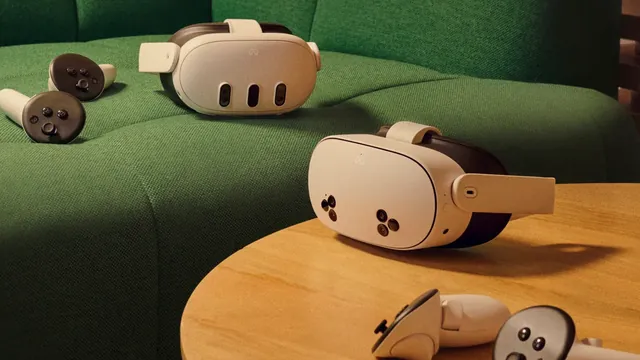
The American Academy of Pediatrics draws its lines the same way. Its policy statement says that "infants do not learn from digital media." For families who want a number, it suggests limits that might be under an hour a day for toddlers and preschoolers. It also says educational media work better when a caregiver joins in by watching together or teaching. The academy's advice for parents adds that video chats can help a baby build relationships with loved ones. VR headsets are a separate question: each maker sets its own minimum age, and our guide covers what age kids can start using VR.
Try this: set up a weekly video call in the second language with a relative or a friend's child, with a toy or a book to talk about, so the call has something to point at.
5. Practice together five minutes a day
This practice is easy to skip, because five minutes sounds too small to matter. The research on how young children learn new words says otherwise: a few minutes spread over many days can do more than the same practice crammed into one day, and asking your child to say the words, not just hear them, helps on top of that. It also asks very little of a busy parent.
Why short and spread out beats long and rare
Memory researchers call the benefit of spreading practice out the spacing effect, and it shows up in toddlers. In a four-week study, 36 two-year-olds, 2 years and 7 months old on average, were taught new nouns, verbs or actions in 5- to 10-minute play sessions with a researcher. Each new word or action came on its own schedule. When it came to saying the new words, hearing a word once a day on four days worked better than hearing it the same number of times in one day, and four spread-out exposures could even beat eight crammed into one day. A second experiment in the same paper found that what mattered most was the number of different days. The authors concluded that 2-year-olds can learn to say a new word from a small number of repetitions, as long as those repetitions are spread over about a week. Understanding the words was near the top of the scale under every schedule; the gains were in saying them.
The effect works on the scale of seconds, too. Three-year-olds remembered which object a new name belonged to better when its presentations were separated by 30 seconds of play than when they came back to back. And it isn't limited to single words: children aged 3½ to almost 6 learned a new sentence pattern better from 10 examples given once a day for 10 days, or twice a day for five days, than from the same 10 examples in one session.
Why your child should say the word, not just hear it
Pulling a word out of memory strengthens it more than hearing it again, an effect called retrieval practice. In experiments with preschoolers learning the names of plush toys, asking the children to come up with the names at growing intervals doubled how many they recalled, and about half of the benefit came from the spacing and half from the act of remembering.
Saying the word out loud helps too. Five-year-olds in a study by Israeli researchers remembered words better when they looked at a picture and said the word than when they only looked at it, or looked and listened.
There's also a difference between catching a word in the moment and keeping it. Two-year-olds in a series of experiments were excellent at picking out which new toy a new word named, yet five minutes later they were very poor at remembering it. When an adult also pointed to the toy and named it clearly, they did remember the first few new words of the session.
Put together, these studies suggest what to look for in any five-minute routine, from picture cards to an app: each new word is named clearly, comes back on several different days, gets said out loud and, now and then, has to come from your child's memory before they hear it again.
How a Tatako session works
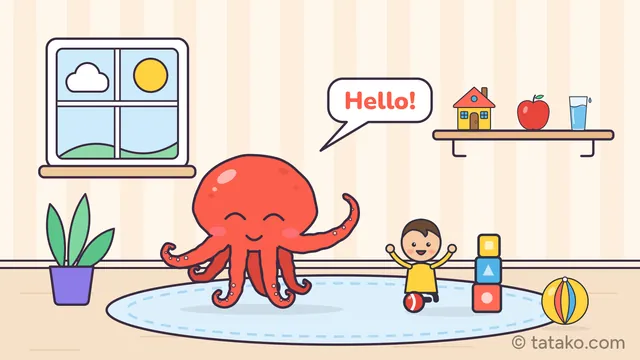
Tatako, a first-words app for parents raising a child with two languages, is built around this kind of short daily session. Disclosure: Tatako and VR.one have the same owner. Parent and child do the lessons together, about five minutes of spoken English a day with nothing to read. The parent leads, and each new word goes through the same three steps:
- Hear it, say it. Each word plays three times, with a pause for your child to say it out loud.
- Touch it. Two pictures appear, and your child touches the one they hear.
- Name it. The picture comes back without the word, and your child names it first.

Between lessons, shaky words come back first and new words wait their turn, and you can choose how many old and new words a lesson mixes. Beyond the lessons, Tatako's blog has a guide to raising a bilingual child that compares the main family language plans, with tips for parents who aren't native speakers.
What it asks of the parent
The lesson voice says the English words, so you don't need to speak English yourself: you sit beside your child and lead. A second voice, the guide voice, adds short prompts and translations in your family's own language, and you can switch it off when your child is ready. Tatako works on the web, on Apple and on Android: iPhone, iPad, Android phones and tablets, and any computer. You sign in with Google, and progress follows your child from device to device.
The one extra job takes about two minutes after each lesson: you mark how every word went, as New, Repeat more, Understands or Can say. That's how the next lesson knows what to do.
Tatako describes its method as its own, built on research in cognitive and child psychology.
Make five minutes a habit
- Same time, same cue. Tie the session to something that already happens every day, like breakfast or bath time. In a study of 96 adults who each picked a daily habit to do in the same situation, such as after breakfast, the habit took from 18 days to an estimated 254 to become nearly as automatic as it would ever get, among the people whose data fit the researchers' model. The authors later put the typical time at about 66 days. Missing a single day made little difference, so a skipped evening isn't a reason to quit.
- Sit together, let your child answer. Sit beside your child, leave the pauses for them to fill, let them find and name each picture first, and cheer every try.
- Stop while it's fun. End while your child still wants more, even if they ask for another round, and come back tomorrow. Tatako's own tip puts it this way: one lesson a day beats seven on Sunday.
- Keep it in proportion. Five focused minutes give a new language a daily foothold. The volume still comes from the other nine practices: conversation, books, songs and people.
6. Read the same books again, and talk about them
Reading aloud works better as a conversation. In dialogic reading, the adult asks open-ended questions about the pictures, waits for the child's answer, repeats it with a few more words and praises the effort. When researchers taught parents of toddlers to read this way in a one-month home program, the children scored reliably higher on tests of expressive language, meaning the words and sentences a child can produce, and spoke in longer sentences than children in a comparison group.
A review of 16 studies that compared dialogic reading with ordinary reading aloud found a moderate extra effect on expressive vocabulary. An effect size, a measure of how big a difference is, puts a number on that: by a common rule of thumb, 0.2 is small, 0.5 moderate and 0.8 large. In the nine studies, with 322 children, that measured expressive vocabulary, it was 0.59. The benefit was largest for 2- and 3-year-olds and much smaller for 4- and 5-year-olds and for children at risk of language and literacy problems.
Repetition matters too. In a study of 16 three-year-olds in England, children were read to at home on three visits over one week. Those who heard the same story three times at each visit kept the new words in it. Those who heard three different stories, with the new words repeated just as often, failed to learn any of them.
These studies weren't about bilingual families, but they're easy to apply: read in the second language, or read a book in any language and talk about it in the second one.
Try this: pick three favorite books in the second language and keep them in rotation for a few weeks. On each page, ask a what or where question, wait, then repeat your child's answer back with one more word.
7. Sing songs, then ask for the words
Songs and rhymes are an easy way to fill the week with a language. In a study that followed 64 English-speaking children from age 3 to 6, the children who knew more nursery rhymes at 3 later had better awareness of the sounds in words and did better at reading and spelling, even after the researchers accounted for family background, IQ and early sound skills. The link appeared to run through that sound awareness: once later sound skills were accounted for, rhyme knowledge no longer predicted reading. It's a correlation in children learning one language, not proof that rhymes make readers.
For a second language, songs seem to help children understand words more than say them. In a study in Spain, 25 five-year-olds learning English had three 30-minute lessons built around one well-known children's song. Picture vocabulary tests before, right after and five weeks later showed some gains in understanding the song's words. But the song alone wasn't enough for most of the children to say them. The authors themselves called it a small piece of research.
Try this: after a song, hold up the object or a picture and pause before the key word, so your child fills it in. Filling in the word turns listening into saying, which, as practice 5 showed, helps new words stick.
8. Keep answering in your language
Sooner or later, many bilingual children figure out that a parent understands both languages and start answering in the easier one. How you respond matters. Linguist Elizabeth Lanza recorded 2-year-olds learning Norwegian and English in Norway. She described the ways parents react when a child mixes in words from the other language: acting as if they don't understand, offering a guess in their own language, repeating the child's words in their own language, simply moving on, or switching languages themselves. Her question was what each response signals to the child about whether mixing is welcome. Her study is built on two children, so treat it as a framework rather than proof.
A study of four children in the US who were learning English and Japanese looked at their conversations with a Japanese-speaking parent. Children seemed to choose Japanese more often when that parent used Japanese consistently. And when the parent made it quite clear they wanted Japanese, the child's next turn was most likely to be in Japanese.
De Houwer's advice to parents points the same way. If you want your child to use your language with you, ask them to repeat what they said in that language, or gently offer the right words. Don't make language an issue, and never rebuke or punish a child for using the other one.
Try this: when your child answers in the other language, reply with a gentle guess in yours and keep playing. Keep it light: the goal is a habit, not a test.
9. Expect mixing and an uneven pace
Mixing two languages in one sentence is a normal stage, not a sign of confusion. In a study of five bilingual children around age 2, observed with each parent separately and together, the children mixed but were "clearly able to differentiate between their two languages"; the authors note that most, if not all, bilingual children mix. Researchers don't agree on what drives it. That study found no sign that the mixing came from the parents, while a study of six children in Canada, learning French with English or with Quebec Sign Language, found that how much the children mixed was directly related to how much their parents mixed. Both studies also linked mixing to the child's own stronger or preferred language.
The same Canadian study found that the children reached their early milestones in both languages at the same time, and on the same schedule as children learning one language. From the start, they had words or signs for the same things in both languages. A related study from the same lab followed six babies in Montreal through their first 50 words and found the same timetable.
Vocabulary is where parents often worry. In any one language, a bilingual toddler can look behind, because their words are split across two. Count both, and the picture changes. A study of children aged 8 to 30 months compared 25 bilingual children with 35 monolingual ones, who were learning only one language, and found "no statistical basis" for calling the bilingual children slower once both languages were counted. A later analysis by the South Florida team from practice 2 found that bilingual toddlers' total vocabulary across both languages matched monolingual children's in size and growth, though their conceptual vocabulary, which counts each concept once, was smaller.
To keep count at home, borrow the researchers' method. On the MacArthur-Bates Communicative Development Inventories, the parent checklist behind many of the studies in this guide, the form for 8- to 18-month-olds asks parents to mark each word as understood, or understood and said, because children understand words well before they can say them. Parents turn out to be good judges: in a study of 24 two-year-olds, reports on the checklist's toddler form lined up closely with lab tests, with correlations of 0.73 to 0.79.
What bilingualism doesn't reliably do is give children a general boost in thinking skills. A review of 143 comparisons between bilingual and monolingual children looked at executive function, the mental skills behind planning, focus and switching between tasks. The overall advantage for bilingual children was tiny, an effect size of 0.06, and the authors found "little support" for a bilingual advantage overall. Only the edge in switching between tasks held up after the authors corrected for publication bias, the tendency of studies with positive results to get published more often. The payoff is the languages themselves: conversations with grandparents, a culture, more choices later in life.
10. Protect the home language with a circle of speakers
Once English arrives through preschool, friends and screens, a home language can start to fade. In a nationwide US survey of 1,001 families who spoke a language other than English at home, published in 1991, 64% of the families whose children attended English-only preschools reported a shift toward English at home, against 47% for bilingual preschools and 26% for the 76 families whose preschools used only the home language. These are parents' own reports, gathered by volunteer interviewers rather than from a random sample, so they show a change in family habits, not measured loss of skill.
By the teenage years, the shift is stark. A survey of more than 5,000 children of immigrants in South Florida and Southern California, most of them around 14, found that in most immigrant groups knowledge of English was nearly universal, while only a minority remained fluent in their parents' languages, with wide differences between groups.
More speakers may help. In the South Florida diary study from practice 2, the number of different people a child heard English from predicted their English vocabulary beyond the sheer amount of English. That finding was for English, not for the home language, Spanish, but it points to something families can act on: a language may matter more to a child when many people speak it, not just one parent.
Try this: build a circle of speakers: grandparents on regular video calls, a playgroup, a babysitter, library story times or weekend school in the language, and friends whose kids speak it.
FAQ
Can I raise a bilingual child if I'm not a native speaker?
Yes, and many families do. In a South Florida study of bilingual 2-year-olds, children's English vocabularies were larger when more of the English they heard came from native speakers, so it may pay to bring a native speaker or two into your child's week. Use the language you're most at home in when you comfort, joke and explain, and the second one where you feel confident.
Is it too late if we didn't start at birth?
It isn't. In a study of 5-year-olds in Montreal learning French and English, children whose exposure to a language began after 20 months of age did not differ in vocabulary from children who heard it before 6 months, as long as their total exposure had been the same. So a later start means making up the hours.
Should we drop our home language if our child's English is behind?
Linguist Annick De Houwer advises against it: there is no scientific evidence that giving up one language automatically helps the other, and abrupt changes in how you talk to your child are best avoided, especially before age 6. If you're worried about your child's speech, ask your pediatrician about a hearing test, even when bilingualism is getting the blame.